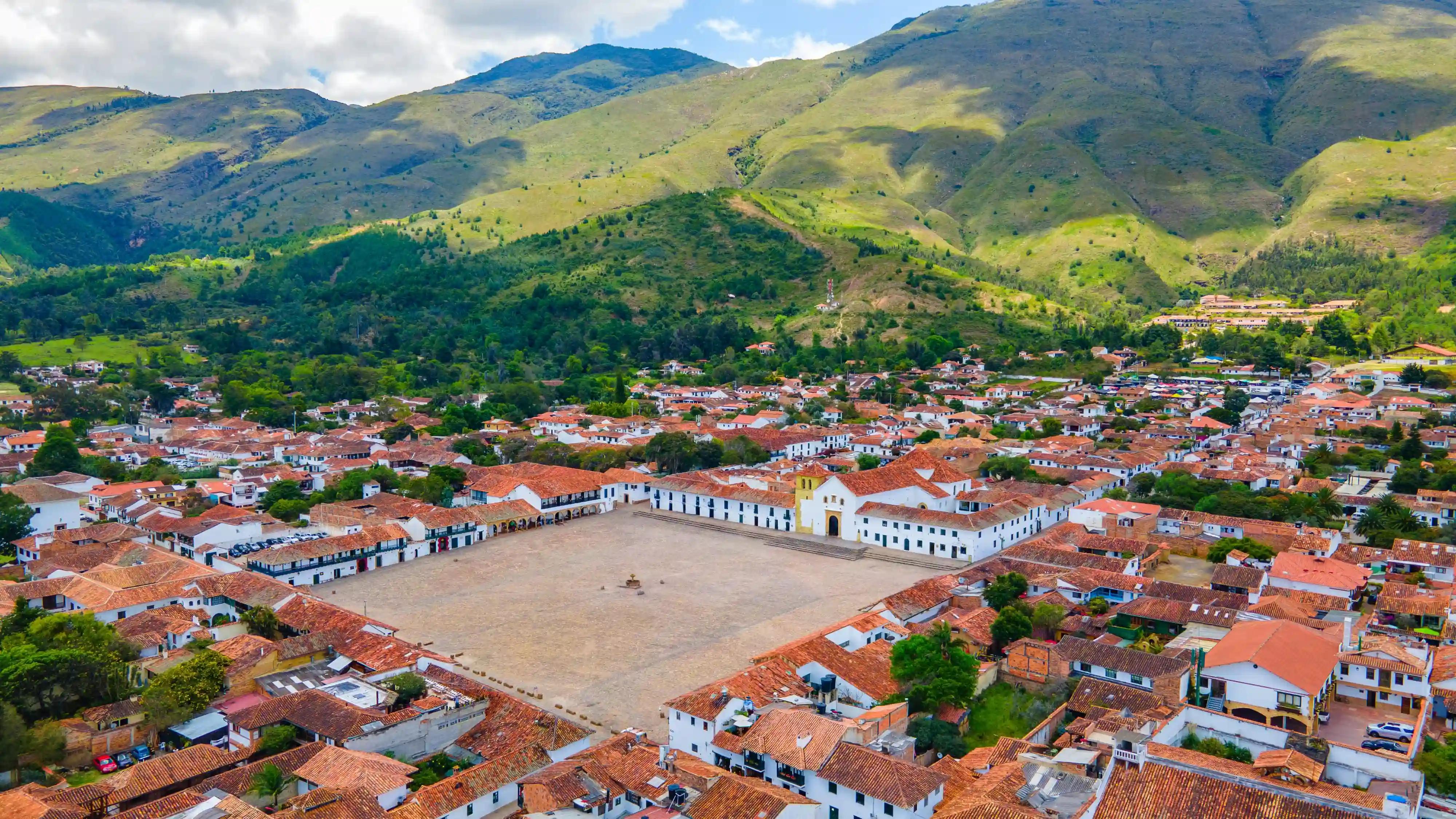
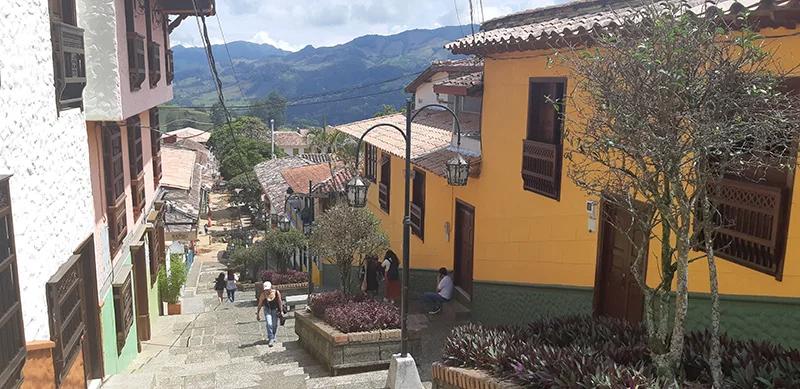
Villa de Leyva is one of the best-preserved colonial towns in South America. Strict preservation laws have kept it almost entirely unchanged since the colonial era — no overhead cables, no modern shop fronts, no concrete. The streets are cobbled, the buildings are whitewashed, and the central plaza is the largest cobbled square in South America.The town sits at 2,149 metres in the dry highlands of the Boyacá department, giving it a clear, bright light and a cool, settled climate that makes it ideal for exploring on foot. In fact, the town has maintained much of its original charm and tranquillity owing to a lack of mineral deposits nearby and the relative aridity of the surrounding landscape
The Plaza Mayor
The Plaza Mayor is the heart of Villa de Leyva and one of the great public spaces in the Americas. Reputedly the largest cobbled square in South America, it is flanked by churches, restaurants, handicraft shops, and traditional whitewashed buildings. The square is entirely free of traffic and overhead wires, which makes it feel—especially in the early morning before the day-trippers arrive—like a genuinely undisturbed colonial landscape.
The fossil museum and Ráquira
Villa de Leyva sits in a region of ancient seabed, and the Museo El Fósil just outside town houses a remarkable collection of marine fossils. This includes the 7-metre-long remains of a kronosaurus, a crocodile-like ancestor dated between 100 and 150 million years old that was beached here when the area was a tropical sea. En route to Villa de Leyva, our tours also stop in the village of Ráquira. Famous for its handicrafts, artisans here produce the vivid hand-thrown terracotta pottery and ceramics that line every shopfront along its painted streets.
The Santo Ecce Homo Convent
This quiet religious outpost highlights the far-reaching influence of European missions during Colombia’s early settlement. Set against the arid Andean landscape, it served as a peaceful retreat for reflection and provides deep historical context for the Spanish colonial presence in the region.
Casa de Terra Cotta
Providing a fascinating modern contrast to the town's strict 16th-century architectural preservation, this livable structure demonstrates how traditional natural materials can be transformed into wildly imaginative, organic shapes. It is a brilliant example of artistic engineering, built entirely without the use of modern cement or steel.
Visiting with Undiscovered Destinations
Villa de Leyva features on Days 3 to 5 of both our Colombia itineraries. The 17-day Secret Heart of Colombia tour and the 28-day Colombia and Panama – Bridging the Americas tour both spend two nights at the charming Hotel & Spa Getsemani (or similar).
You will journey here on a scenic overland drive from Bogotá, stopping en route to descend into the subterranean Salt Cathedral of Zipaquirá and admire the skills of local craftsmen in Ráquira. Your full day of sightseeing in Villa de Leyva includes the Plaza Mayor, the Santo Ecce Homo Convent, the fossil museum, and the Casa de Terra Cotta.
Upon leaving the town on Day 5, our tour takes an alternative scenic back-road via Tunja. Here, you will stop at the Boyacá Bridge, a tiny white-washed stone crossing that serves as the most important monument in Colombian history—the exact site where Simón Bolívar won his most decisive battle for independence.